Tadesan, a company in the automotive sector specialized in injected plastic parts, needed to guarantee the highest quality in its visual components.
In an environment where even the slightest defect —such as a scratch, burr, or missing detail— can lead to an entire batch being rejected, quality control had to be exhaustive and fully reliable.
Until now, inspection was done manually, with operators reviewing each part. This process was slow, costly, and prone to human error —especially on high-speed production lines.
The solution? Apply artificial intelligence based on Deep Learning to fully automate inspection and eliminate the risk of defective parts reaching the customer.
The main challenge was to develop a system capable of detecting very subtle aesthetic defects —such as micro-missing areas or texture variations— in plastic parts with different tones and finishes, without manual adjustments and while maintaining the cycle time of the robotic cell.
Additionally, the system needed to integrate seamlessly with the existing industrial robot, communicating in real time to classify each part as OK or NOK and decide its path on the line automatically.
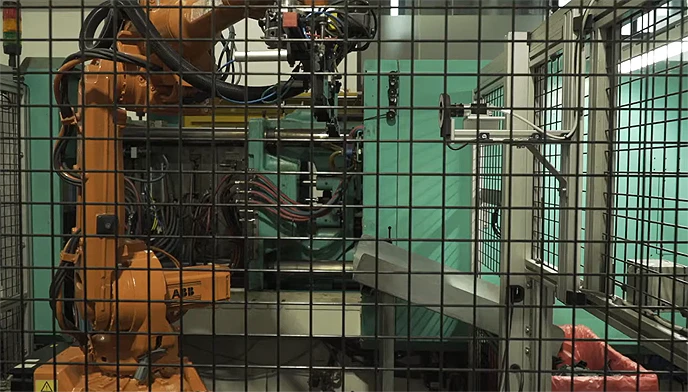
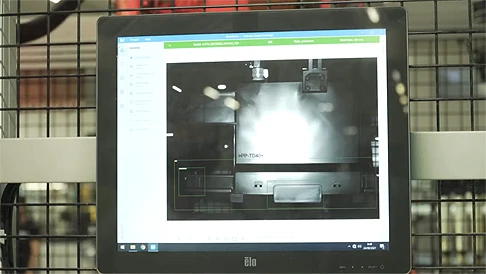
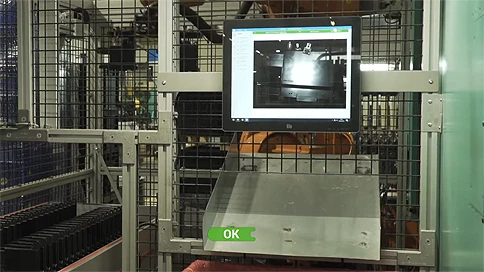
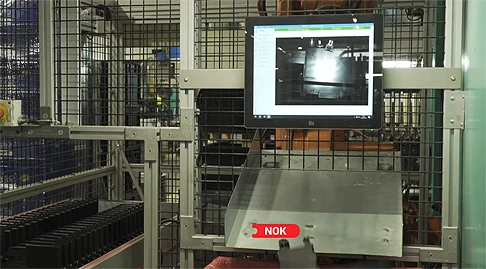
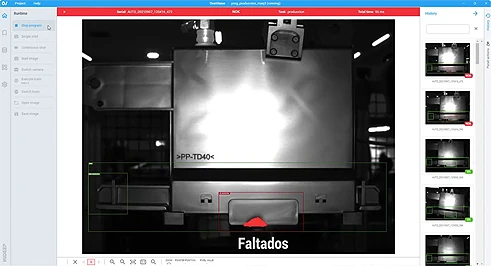
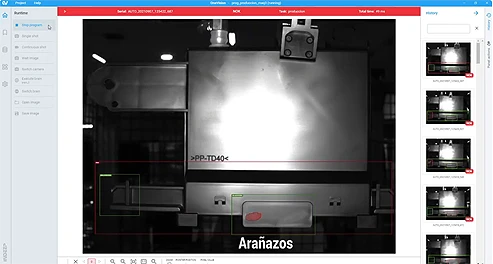
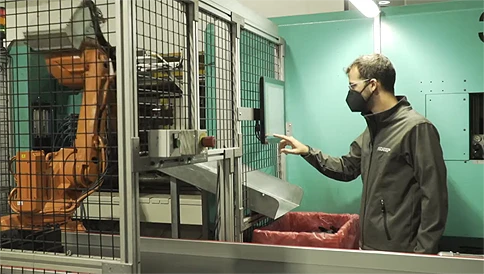
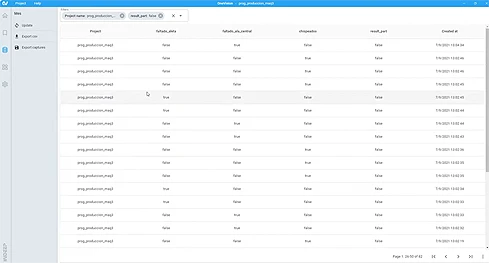
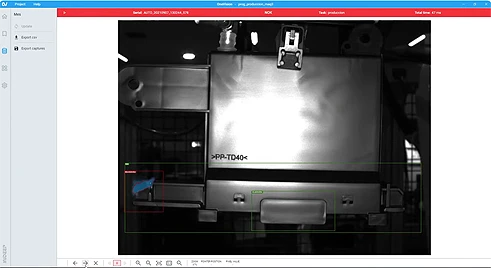
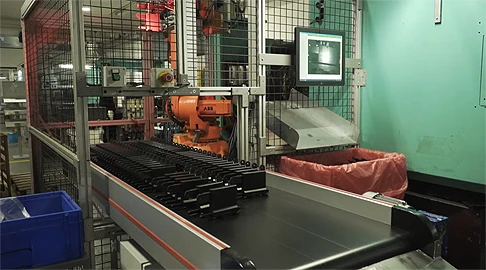
Thanks to OneVision, the software developed by ID Vision, a Deep Learning-based vision system was fully integrated into Tadesan’s robotic cell.
The system can:
Tadesan is a company specialized in the injection of plastic parts for the automotive sector, with a strong commitment to innovation, quality, and process automation.



